
Misconfigured systems provide one of the easiest ways for attackers to enter an environment (probably second only phishing). Inconsistent configuration management exposes your organisation to credential theft, privilege escalation, unauthorised access and avoidable compliance gaps. For Australian organisations the risk is magnified by remote work, mixed device fleets and expanding cloud workloads.
DotSec has more than 25 years of experience building and maintaining hardened operating systems, secure cloud environments and standardised baselines for government, financial services, national retailers and legal firms. We design and implement secure configurations using industry recognised frameworks including ASD Essential Eight, CIS Benchmarks, Microsoft 365 Secure Configuration, PCI DSS, and NIST guidance. Our goal is to deliver consistent, resilient and defendable system configurations without disrupting business operations.
System hardening is the process of reducing your attack surface by removing unnecessary components, disabling insecure settings and enforcing consistent security controls across all devices and workloads. This includes workstation builds, mobile devices, servers, cloud tenants and applications.
Hardening activities commonly include:
Attackers routinely exploit misconfiguration because it is easier and faster than writing an exploit. Hardening ensures that systems follow known good configurations that align with recognised frameworks and remain consistent across the organisation.
If you maintain workstations, servers, cloud environments or mobile devices then yes, you do. Hardening is a required practice for compliance and is one of the most reliable ways to reduce preventable compromise.
You may need hardening support if your organisation:
Most organisations benefit from a mix of baseline reviews, configuration development and automated deployment. DotSec supports a range of technologies and frameworks and tailors each solution to your environment.
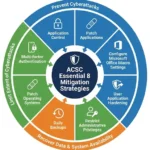
DotSec designs and maintains Standard Operating Environments that align with the ASD Essential Eight and recognised industry guidance.
These SOEs create consistent workstation and server builds that remove unnecessary software, enforce privilege limits and apply strong security controls from the start.
Key features include:
We ensure your SOEs deliver practical security improvements without degrading usability or breaking operational processes.

Microsoft Intune provides a central platform for managing Windows workstations, iOS devices, Android devices and application configurations.
DotSec configures Intune to enforce strong, validated security baselines that support modern authentication and Essential Eight requirements.
Key features include:
We also apply guidance consistent with Microsoft’s MD 102 certification which focuses on secure modern endpoint management.

For organisations with Linux servers or mixed cloud workloads, Ansible provides a scalable, version controlled approach to secure configuration.
DotSec builds and maintains Ansible playbooks that enforce hardened baselines on RHEL, Ubuntu, Amazon Linux and other distributions.
Key features include:
DotSec ensures Linux environments remain consistent, auditable and aligned with recognised security requirements.
DotSec delivers secure configuration services that are practical, evidence driven and aligned with real world operations. We stand out for several reasons:
Your systems end up secure, predictable and easier to maintain.
Answer: System hardening is the process of reducing the attack surface of a system by disabling unnecessary functions, enforcing secure settings and ensuring consistent configuration across devices and workloads. Hardening aligns systems with recognised frameworks and reduces the likelihood of compromise due to misconfiguration.
Reference: https://www.cyber.gov.au/resources-business-and-government/system-hardening
Answer: CIS Benchmarks are consensus developed security configuration guidelines for operating systems, applications and cloud platforms. They are created by global subject matter experts and map to controls in frameworks such as ISO 27001, NIST SP 800 53 and the Australian Government Information Security Manual.
Reference: Center for Internet Security (CIS) Benchmarks Overview
Answer: When designed and tested correctly, hardening should not impede usability. Best practice guidance recommends validating configuration changes in a test environment first to ensure they align with business operations. Controlled rollouts reduce disruption and maintain user productivity.
Reference: NIST SP 800-128 Guide for Security Focused Configuration Management of Information Systems
Answer: A few. DotSec supports hardening and secure configuration across Windows, macOS, Linux, Microsoft 365, Azure, AWS, mobile platforms and identity systems. This includes Intune, GPO, Ansible, SOEs, and baseline development aligned with CIS, Essential Eight and NIST guidance.
Reference: https://owasp.org/www-community/attacks/DOM_Based_XSS
Improving secure configuration begins with understanding the current state of your systems, device fleets and cloud environments. DotSec can perform a baseline review using recognised frameworks such as CIS Benchmarks, Essential Eight hardening requirements and Microsoft 365 Secure Configuration guidance. This provides a clear picture of configuration drift, privilege issues, legacy settings and gaps that increase the likelihood of compromise.
Once the baseline is known, we work with you to design a hardening approach that fits your operational environment. This may include creating or updating SOEs, implementing staged Intune configuration profiles, developing Ansible playbooks for Linux, reducing unnecessary privilege, or applying hardened Microsoft 365 and Azure controls. All changes are validated in development first so that improvements are introduced safely and predictably.
If you want greater consistency across your systems, improved compliance posture or assurance that your configurations follow recognised good practice, DotSec can help. Our assessors and engineers bring decades of real world experience and provide practical, prioritised guidance that reduces attack surface without creating unnecessary friction. Reach out and we can map out the most effective next steps for your environment.
Practical and experienced Australian ISO 27001 and ISMS consulting services. We will help you to establish, implement and maintain an effective information security management system (ISMS).
DotSec’s penetration tests are conducted by experienced, Australian testers who understand real-world attacks and secure-system development. Clear, actionable recommendations, every time.
dotSec stands out among other PCI DSS companies in Australia: We are not only a PCI QSA company, we are a PCI DSS-compliant service provider so we have first-hand compliance experience.
Web Application Firewalls (WAFs) are critical for protecting web applications and services, by inspecting and filtering out malicious requests before they reach your web servers
Multi-Factor Authentication (MFA) and Single Sign-On (SSO) reduce password risks, simplify access, letting verified and authorised users reach sensitive systems, services and apps.
dotSec provides comprehensive vulnerability management services. And we analyse findings in the context of your specific environment, priorities and threat landscape.
We don’t just test whether users will click a suspicious link — we also run exercises, simulating phishing attacks that are capable of bypassing multi-factor authentication (MFA) protections.
DotSec’s penetration testing services help you identify and reduce technical security risks across your applications, cloud services and internal networks. Clear, actionable recommendations, every time!
dotSec has provided Australian managed SOC, SIEM and EDR services for 15 years. PCI DSS-compliant and ISO 27001-certified. Advanced log analytics, threat detection and expert investigation services.
We provide prioritised, practical guidance on how to implement secure configurations properly. Choose from automated deployment via Intune for Windows, Ansible for Linux or Cloud Formation for AWS.
Secure web hosting is fundamental to protecting online assets and customer data. We have over a decade of AWS experience providing highly secure, scalable, and reliable cloud infrastructure.
DotSec helps organisations to benefit from the ACSC Essential Eight by assessing maturity levels, applying practical security controls, assessing compliance, and improving resilience against attacks.
We have over 25 years of cyber security experience, providing practical risk-based guidance, advisory and CISO services to a wide range of public and private organisations across Australia.